Characters in The Brothers Karamazov
Alexey Fyodorovitch Karamazov
Alexey Fyodorovitch—Alyosha—is the youngest Karamazov son and embodies a radically different response to existence than his brothers. Raised largely away from his father's corrupting influence, he has embraced monastic life under the guidance of the elder Zossima, seeking not escape from the world but transformation through love and faith. His central quality is an almost preternatural absence of judgment; he meets sinners and the suffering with the same gentle attention, viewing each soul as worthy of compassion and redemption. This is not naïveté but hard-won spiritual maturity—he has consciously chosen love over cynicism, faith over doubt. Alyosha's innocence becomes his greatest strength and vulnerability. He moves through a world of complex adult passions with a transparency that often confuses or disarms those he encounters. When his beloved elder dies and his brother is accused of murder, Alyosha is forced to confront the insufficiency of love and faith to resolve the world's suffering—yet rather than retreat into bitterness, he emerges with deepened compassion. His journey is the novel's most hopeful arc, suggesting that even in a world of doubt and moral chaos, redemption through love remains possible.
Dmitri Fyodorovitch Karamazov
Dmitri Fyodorovitch is the eldest Karamazov son and the novel's tragic hero, a man of passionate temperament whose life is consumed by conflicting desires and mounting desperation. A former military officer, he carries the bearing and discipline of his service alongside an emotionalism and sensuality that frequently overwhelm his judgment. His relationship with his father is one of simmering hatred, rooted in financial disputes over his maternal inheritance and his father's shameless pursuit of his own mistress, the young woman Dmitri loves. This rivalry becomes pathologically intense, poisoning Dmitri's mind and driving him to extremes of rage and self-destruction. Dmitri is capable of genuine nobility—he treats his brothers with respect, shows kindness to those he encounters, and possesses a romantic idealism that contrasts sharply with his sensual appetites. Yet he is undone by his inability to master his passions. His accusation in his father's death forces him to confront the terrible gap between his intentions and his actions, between the man he wishes to be and the man his appetites and rage have made him. Throughout his ordeal, Dmitri oscillates between defiance and despair, his large, expressive eyes reflecting the turbulent inner life of a soul at war with itself.
Father Zossima
Father Zossima is the elder at the monastery and the spiritual anchor of the novel, a man whose gentle faith and radical compassion offer an alternative vision to the cynicism and passion consuming the Karamazov family. An old monk of great age and increasing frailty, he has devoted his life to a ministry of listening and spiritual counsel, drawing pilgrims from across Russia who seek his blessing and guidance. His power derives not from theological learning or institutional authority but from his perceived holiness—a quality his presence seems to emanate regardless of his physical weakness. Zossima sees into human hearts with clarity tempered by boundless mercy; he meets sin not with condemnation but with sorrowful understanding. His relationship with Alyosha is central to both their lives. Zossima recognizes in the young novice a spiritual kinship with his deceased brother, and through Alyosha he attempts to extend his mission into the world beyond the monastery walls. His teachings emphasize that salvation comes through love and active participation in the world's suffering, not escape from it. When Zossima dies—an event that tests Alyosha's faith profoundly—he leaves behind a legacy not of institutional power but of transformed souls, each carrying forward his vision of redemptive love.
Fyodor Pavlovitch Karamazov
Fyodor Pavlovitch Karamazov is the dissolute patriarch of the novel, a man whose life epitomizes the corruption and chaos that engulfs his family. Once a poor nobleman, he leveraged an advantageous marriage to build a fortune, though he squandered any claim to respectability through decades of flagrant vice and cruelty. He fathered three sons—Dmitri by his first wife Adelaïda Ivanovna, and Ivan and Alexey by his second wife Sofya Ivanovna—yet showed contempt for his paternal duties, gladly handing his children to servants and later to distant relations. His life is a masterclass in amoral pragmatism masked by theatrical buffoonery; he jokes his way through scandals, weeps manipulative tears, and treats serious matters with grotesque levity. Yet beneath the cynical libertine lies a tormented soul. In moments of drunken clarity, he is seized by inexplicable terror and a hunger for moral companionship he despises himself for needing. Grigory, his faithful servant, becomes both witness and confessor to his secret desperation—a relationship that defines the strange, parasitic intimacy binding master and servant. Fyodor Pavlovitch's death, when it comes, is violent and shocking, leaving behind a legacy of unresolved hatred, financial manipulation, and psychological wounds that will haunt his sons for years to come.
Ivan Fyodorovitch Karamazov
Ivan Fyodorovitch is the second Karamazov son and the novel's philosophical antagonist, a brilliant intellectual whose radical denial of God and conventional morality becomes the ideological heart of the tragedy. Educated and ambitious, Ivan has deliberately constructed a rational worldview in which divine justice is impossible and moral law is merely human convention. His famous declaration—that without God, everything is lawful—represents the cutting edge of contemporary skepticism, yet it torments him even as he articulates it. He carries an implicit coldness that masks profound inner turmoil; his indifference to others, including his younger brother Alyosha, serves as both armor and symptom of his spiritual alienation. Ivan's relationship with his father is one of contempt mixed with reluctant kinship—both are, in their ways, amoral sensualists. Yet where Fyodor Pavlovitch acts without reflection, Ivan thinks constantly, his mind a battleground between devastating logic and suppressed emotional needs. His greatest vulnerability lies in the gap between his theory and his practice: he professes that morality is meaningless, yet he is haunted by the actions of those who take his philosophy to its logical conclusion. By the novel's end, Ivan's intellectual edifice crumbles, and he is left confronting the possibility that his rationalism is itself a form of madness, his clarity a descent into darkness.
Grushenka
Grushenka is a young woman of lower social standing whose beauty and personal magnetism make her the object of intense desire and conflict within the novel. Pursued simultaneously by Dmitri and his father Fyodor Pavlovitch, she becomes the focal point of the passionate energies that drive the family toward tragedy. Unlike Katerina Ivanovna, she does not operate within the constraints of social propriety, and her relative freedom of choice gives her a paradoxical power—even as her social vulnerability makes her dependent on male protection and patronage. Her relationship with Dmitri is marked by genuine affection mixed with calculation; she is capable of manipulating his passions while also being moved by his suffering. Grushenka represents the sensual pole of the novel's moral universe, the embodiment of earthly desire that wars against the spiritual and intellectual values represented by other characters. Her presence catalyzes the tragedy that consumes Dmitri, yet she also possesses a capacity for sympathy and growth that hints at redemptive possibilities even for those caught in sensual entanglement.
Smerdyakov
Smerdyakov is a young servant in Fyodor Pavlovitch's household, possibly his illegitimate son, and a figure of tragic malleability. Afflicted with epileptic seizures and apparent mental deficiency, he occupies an ambiguous position within the household hierarchy—neither fully servant nor family, neither completely rational nor certifiably insane. Unlike Grigory, who embodies an older tradition of unquestioning loyalty, Smerdyakov represents a new generation adrift between social classes and moral certainties. His greatest vulnerability is his susceptibility to intellectual influence; when he encounters Ivan's radical philosophy—the notion that without God everything is lawful—he embraces it with the literalism of a disordered mind, stripping away any moderating context or irony. Smerdyakov becomes the unwitting instrument through which Ivan's abstract ideas acquire concrete, murderous consequence. His suicide in the novel's aftermath represents the ultimate tragedy of thought divorced from moral wisdom: a damaged soul destroyed not by original depravity but by ideas he could neither properly understand nor withstand. His death leaves a trail of moral questions in its wake, forcing readers to contemplate the responsibility of the thinker for the actions of those who carry his ideas to their terrible conclusion.
Adelaïda Ivanovna Karamazov
Adelaïda Ivanovna is the first wife of Fyodor Pavlovitch and the mother of Dmitri, a figure whose romantic idealism leads directly to familial tragedy. Born into wealth and distinction, she represented the new generation of educated, vigorous women—intelligent and physically strong, with a fierce independence that led her to defy her family's expectations. Her elopement with the seemingly disreputable Fyodor Pavlovitch was an act of rebellion against social constraint, a desire to express her autonomy through shocking transgression. Yet this romantic gesture revealed itself almost immediately as a catastrophic mistake: she discovered that she felt nothing but contempt for her husband, and the marriage descended into scenes of mutual recrimination. Adelaïda's abandonment of her young son Dmitri to run away with a penurious divinity student became the defining trauma of Dmitri's life, a maternal desertion that would haunt him through decades of subsequent suffering and rage. Though she appears only through retrospective narration, her absence shapes the novel profoundly—she represents the failure of romantic idealism to withstand reality, and her legacy is a son marked by her rejection, seeking in his own passionate attachments a redemption she failed to provide.
Captain Alexei Ivanovich Snegiryov
Captain Alexei Ivanovich Snegiryov is a retired military officer whose life has spiraled into poverty, humiliation, and psychological fragmentation. Once a man of some standing, he has been reduced to dependence on meager pensions and whatever work he can obtain, a degradation that has transformed him into a figure of pathos and defensive aggression. When Dmitri Karamazov publicly humiliates him—pulling out his beard in a drunken rage—the Captain's wounded pride becomes pathological. Yet beneath his buffoonery and aggressive defensiveness lies a profound capacity for love, particularly for his son Ilusha. The Captain's greatest strength and tragedy is his loyalty to his family despite his complete inability to provide for them materially or emotionally in any stable way. His existence becomes a study in the psychological consequences of shame, as he oscillates between self-deprecating humor and explosive resentment. When Alyosha attempts to reconcile him with Dmitri, the Captain's response reveals both his desperation for human connection and his inability to accept forgiveness that does not erase his humiliation. By the novel's end, he emerges as a figure of genuine pathos—not noble in suffering, but tragic precisely in his ordinariness and his impossible struggle to maintain human dignity in circumstances designed to strip it away.
Grigory Vassilyevitch
Grigory Vassilyevitch is the old servant who has devoted his life to the Karamazov household, remaining faithful to his master despite—or perhaps because of—Fyodor Pavlovitch's unworthiness. Unlike the younger, more morally flexible Smerdyakov, Grigory embodies an older tradition of servant morality based on absolute loyalty and unquestioning duty. He is honest and incorruptible, guided by a rigid sense of obligation that transcends personal preference or rational calculation. When his wife Marfa urged him to leave after the emancipation of the serfs and use their savings to open a shop in Moscow, Grigory refused with characteristic stubbornness: "the woman's talking nonsense, for every woman is dishonest," and their duty was to remain with their old master whatever his faults. Grigory's greatest virtue and limitation is his absolute fidelity. He has exerted a profound stabilizing influence over Fyodor Pavlovitch, who paradoxically depends on Grigory's judgment and moral presence to ground him during moments of superstitious terror. Grigory also protected Sofya Ivanovna, Alyosha's mother, from her husband's cruelty and disrespect, showing that his loyalty extends beyond blind obedience to include care for those who suffer under his master's depravity. His steadfast character provides a moral counterweight to the chaos and corruption surrounding him.
Ilusha Snegiryov
Ilusha Snegiryov is a sensitive young boy whose physical and emotional fragility makes him vulnerable to the psychological torments of school life and his unstable family circumstances. The son of the impoverished Captain Snegiryov, he is intensely devoted to his father, viewing the older man's humiliations with a loyalty that borders on self-sacrifice. His psychological collapse centers on his belief that he killed a dog named Zhutchka—a guilt that may be real or imagined, but which manifests as a destructive obsession. As Ilusha's illness progresses toward death, he becomes a focal point for moral reckoning among the schoolboys, particularly Kolya and Alyosha, whose attempts to comfort him force them to confront questions of suffering, redemption, and the inadequacy of rational explanation in the face of innocent suffering. His death, though it occurs at the novel's periphery, resonates with profound spiritual weight, suggesting that the world's suffering cannot be rationalized away but must be met with compassion.
Kolya Krassotkin
Kolya Krassotkin is a brilliant but affected schoolboy of thirteen whose precocious intellect and social ambition drive much of his behavior. He desperately wishes to be treated as an equal by adults and resents any reminder of his youth, particularly regarding his name, which he considers "trivial" and "ordinary." His intelligence is genuine—he reads widely, thinks deeply, and aspires to great things—yet it is marred by vanity and a performative quality, as if he is constantly conscious of making an impression. His elaborate schemes, such as his dramatic entrance with his dog, suggest a boy caught between childhood games and adult seriousness, unable to fully occupy either realm. Despite his affectations, Kolya demonstrates genuine sympathy for the suffering of others, particularly the dying boy Ilusha, and his relationship with Alyosha becomes a genuine meeting of minds across the divide of age and experience. By the novel's end, he shows signs of developing into a morally serious young man, his precocity tempered by authentic compassion.
Lise Khokhlakova
Lise Khokhlakova is a young woman living with her widowed mother, Madame Hohlakov, in a house on Lake Street. Paralyzed in her legs and confined to a wheelchair or chair, she possesses an alert, restless mind that chafes against her physical limitations. She is acutely aware of the romantic complications swirling through her mother's household and the broader social circle—particularly the contest between Ivan and Dmitri for Katerina Ivanovna's affections. Her comments, delivered from behind closed doors or from her chair, are often cutting, sardonic, and revealing of a precocious understanding of human weakness and hypocrisy. Lise harbors complex, contradictory feelings: she despises yet is fascinated by those around her, she craves love yet claims to hate everyone, she performs illness as both shield and weapon. Her relationship with Alyosha Karamazov—the young novice whom she perceives as genuinely virtuous—becomes a focal point of her emotional intensity. She experiences sudden, violent mood swings, moving from bitter mockery to desperate tenderness to self-harm within moments. Though outwardly dependent, her sharp tongue and emotional volatility give her a strange power in her household. She represents a portrait of adolescent sensitivity crushed by circumstance, intelligence warped by isolation, and tenderness corrupted by bitterness.
Madame Hohlakov
Madame Hohlakov is a vivacious widow of means who occupies a central place in the town's society and at the monastery. Intelligent, deeply engaged in the spiritual life of the community, and passionately invested in the romantic and moral fortunes of the young men around her—particularly Alyosha and Ivan Karamazov—she is a woman of quick wit, rapid speech, and dramatic emotionality. She lavishes affection on young people, whom she regards as the 'prop' and 'hope' of Russia. Her home is a salon where intellectual and social life intersects with piety and gossip. Though prone to exaggeration, theatrical concern, and well-intentioned but clumsy meddling in others' affairs, she possesses genuine warmth and practical resourcefulness. She dotes on her daughter Lise and takes pride in her own spiritual sensitivity and cultural accomplishments. Her letters to Alyosha are lengthy and confidential; her conversations whirl with observations about character, morality, and the inner lives of those around her. She is neither cynical nor entirely naive, but rather a woman caught between sincere faith, social ambition, maternal anxiety, and an irrepressible love of dramatic human situations.
Pyotr Alexandrovitch Miüsov
Pyotr Alexandrovitch Miüsov is a distant relation of the Karamazovs and representative of the educated, liberal gentry of provincial Russia. A man of refinement and propriety, he is acutely sensitive to questions of reputation and social standing, particularly regarding the family's honor. Though he has some sympathy for the Karamazovs, he approaches them with a mixture of concern and condescension, viewing himself as their superior in education and morality. His involvement in family affairs, particularly his attempt to mediate the gathering at the monastery, reveals both his good intentions and his fundamental inability to understand the deeper moral and spiritual dimensions of the family's crisis. He serves as a foil to the more spiritually engaged characters, representing a secular rationalism that, while respectable, lacks the transformative power of genuine faith or suffering.
Marfa Ignatyevna
Marfa Ignatyevna is the wife of Grigory and a devoted servant in the Karamazov household for decades. Where her husband embodies unquestioning loyalty rooted in rigid moral principle, Marfa represents a more practical, questioning spirit. After the emancipation of the serfs, she urged Grigory to leave Fyodor Pavlovitch and use their small savings to open a shop in Moscow, a sensible proposal that would have given them independence and dignity. Yet when her husband refused with his characteristic stubbornness, declaring that "the woman's talking nonsense, for every woman is dishonest," she submitted to his authority despite her own better judgment. Her acquiescence represents the traditional submission of wives to husbands even when the wife's reasoning is superior. Though she appears only briefly in direct narration, her presence in the household provides a counterweight to Grigory's absolutism, suggesting that even within rigid structures of duty and authority, questions of rational self-interest and independence persist.

Rakitin
Rakitin is the ambitious, resentful son of a priest whose intellect and social climbing drive his behavior throughout the novel. Moving between the monastery and secular society, he represents a new generation of Russian intellectual life—educated, skeptical, yet not fully committed to either spiritual or material pursuits. His resentment toward the Karamazovs for their superior social status manifests in sarcasm and defensiveness; he is acutely aware of his position as a social inferior and carries a chip on his shoulder about it. His frequent visits to Grushenka's house and his defensive reaction to Alyosha's innocent question about her reveal his own moral ambiguity and his tendency toward hypocrisy. Rakitin serves as a foil to Alyosha, representing the intellectual whose skepticism prevents genuine moral engagement with the world's suffering, and whose ambition keeps him perpetually calculating his advantage. Though he appears in only scattered scenes, he embodies a type of Russian intellectual common to the era—intelligent enough to recognize true virtue when he encounters it, yet too compromised by resentment and worldly ambition to embrace it.
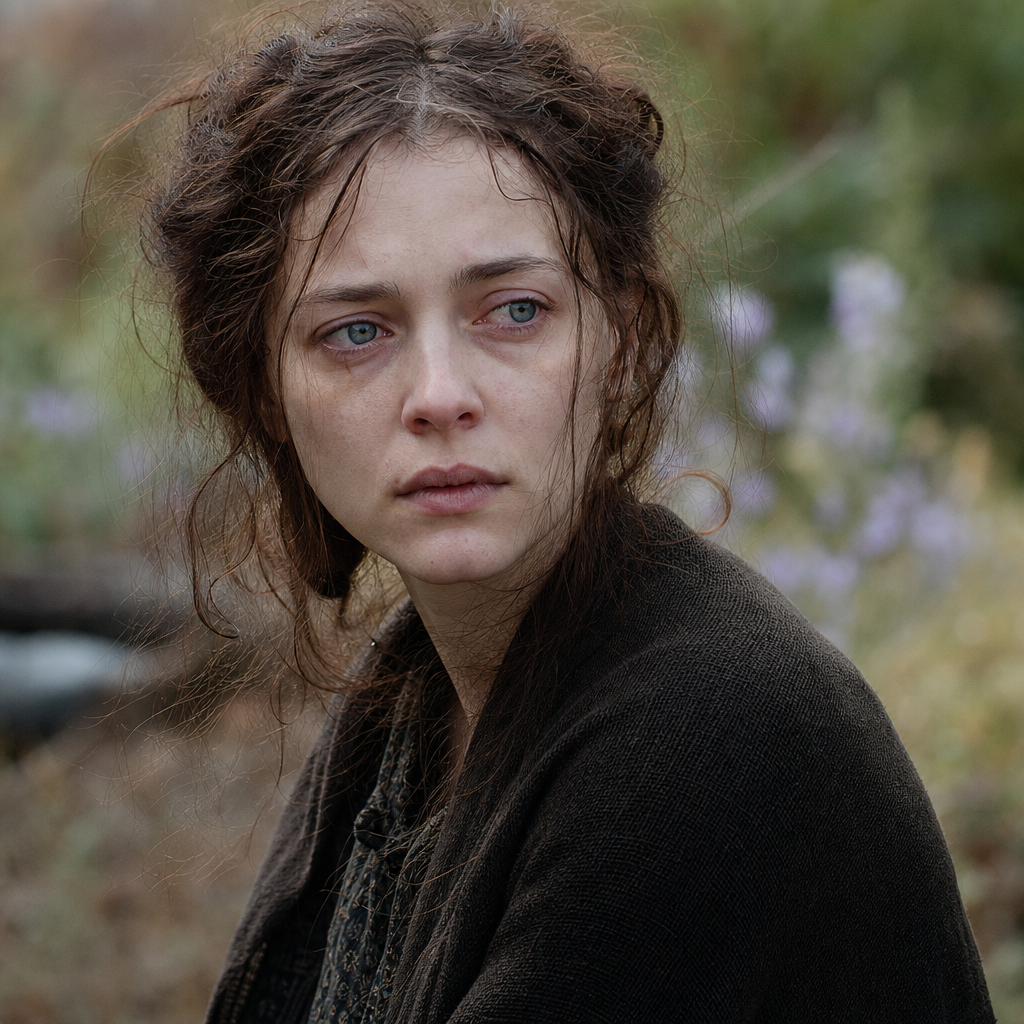
Sofya Ivanovna Karamazov
Sofya Ivanovna is the second wife of Fyodor Pavlovitch and the mother of Ivan and Alyosha, a gentle, tragic figure who appears in the novel primarily through the compassion she inspired in others and her influence on her sons. Described as a meek creature of humble origin, she endured the degradations of marriage to a depraved sensualist with what appears to have been passive suffering rather than active resistance. She was utterly defenseless against Fyodor Pavlovitch's cruelty, and it was Grigory, the household servant, who became her fierce protector, defending her from disrespect even when her husband showed her none. Sofya Ivanovna's death when Alyosha was still young created a void that the boy's spiritual seeking would later fill through his devotion to Father Zossima. Though she never appears directly in the narrative, her gentle spirit—the antithesis of her husband's depravity—shaped Alyosha's capacity for compassion and may have influenced Ivan's intellectual rebellion against a world in which such meek suffering goes unrewarded.