Character · The Odyssey
Zeus (Jove) (Jupiter)
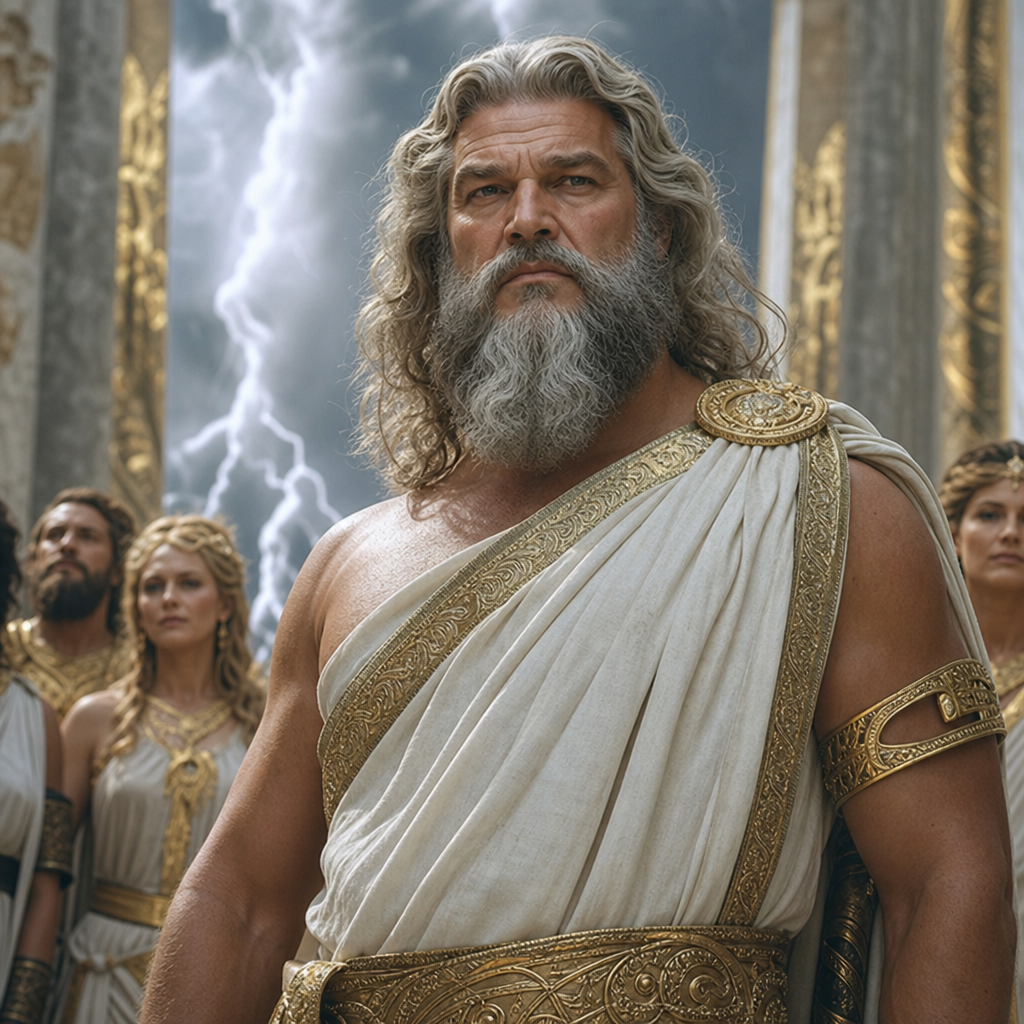
Zeus functions as the ultimate authority in the divine hierarchy, representing cosmic order and the will of fate that even gods must respect. His role in the Odyssey is primarily that of facilitator: he listens to Athene's arguments on behalf of Odysseus (Ulysses) and, convinced of the justice of her cause, authorizes divine intervention on the mortal's behalf. Yet his authority has limits—he respects the autonomous power of other gods, particularly Poseidon (Neptune), and does not simply overrule their prerogatives through raw power. This suggests a universe governed by law and mutual respect even among immortals, not mere tyranny.
Zeus embodies the principle that justice will ultimately prevail, though the path to justice may be long and arduous. He allows Poseidon (Neptune) his revenge for the blinding of his son, yet ensures through his authority that this punishment does not become infinite or eternal. His appearance in councils of the gods establishes a framework of divine justice and obligation that shapes the entire arc of Odysseus (Ulysses)' journey. In this sense, Zeus represents not arbitrary divine power but ordered cosmos—a universe where even suffering has meaning and purpose within a larger design.