Characters in The Odyssey
Athena (Minerva)
Athene stands as Ulysses' divine advocate and guardian throughout his long ordeal, embodying the principle that wisdom and strategic intelligence are as important as martial prowess. Her grey eyes are symbolic of her wisdom and clarity of vision—she sees through deception, understands the consequences of actions, and plots a course toward justice and rightful order. Though she cannot directly violate cosmic law or override the will of other gods (particularly Poseidon's wrath), she works ceaselessly within the bounds of divine authority to ensure that Ulysses receives aid and that his suffering does not persist beyond reason. Her investment in Ulysses stems from genuine respect for his character and capabilities. She argues passionately before Zeus and the assembled gods that Ulysses is worthy of their pity and aid, reminding them of his sacrifices at Troy and his long loyalty. Throughout his adventures, she appears in various guises—as a servant, as Mentor, as an ethereal presence—to warn, guide, and protect. She beautifies Ulysses before the Phaeacians to ensure his favorable reception, suggesting that wisdom encompasses understanding how presentation influences outcomes. Her ultimate role is as guarantor of a restored and proper order, ensuring that the household of Ulysses is cleansed of the suitors' corruption and that legitimate authority is reestablished.
Odysseus (Ulysses)
Ulysses is a man of extraordinary resilience and intellect, defined equally by his cunning and his suffering. As king of Ithaca, he commands respect through both strategic brilliance and proven courage in the Trojan War. Yet his defining struggle is not martial glory but the seemingly impossible journey home, a voyage that has tested every aspect of his character. He has endured shipwrecks, encounters with monstrous creatures, and separation from his beloved wife Penelope and son Telemachus for twenty long years. Torn between the allure of divine beings who would keep him—the goddess Calypso on her island and the enchantress Circe—Ulysses never wavers in his primary longing: to see his homeland again and reclaim his rightful place. He recognizes that nothing surpasses the bond between a man and his own country, his parents, and his family. His composure in grief is legendary; he can weep inwardly while maintaining an unmoved facade, a duality that reflects his mastery of both emotion and reason. Ulysses embodies the ideal of the resourceful hero who triumphs through intelligence and perseverance rather than brute force alone. His many trials—from the Cyclopes to the Lotus-eaters, from shipwrecks to divine wrath—serve to forge him into a figure of mythic endurance, yet he never loses sight of his fundamental humanity or his love for those waiting at home.
Penelope
Penelope stands as a figure of steadfast devotion and remarkable ingenuity, embodying the feminine counterpart to Ulysses' long struggle homeward. For twenty years she has waited and strategized, refusing to abandon hope that her husband will return despite mounting pressure from suitors who have invaded her household and consumed her estate. Rather than submit to forced remarriage, she has employed brilliant delaying tactics, most notably creating an enormous piece of needlework on a great loom and unpicking it each night by torchlight, fooling the suitors for three years before her maids betrayed her ruse. As queen and mother, Penelope bears the weight of governing Ithaca and raising Telemachus to manhood during his father's absence. She is neither passive nor helpless; instead, she demonstrates a keen strategic mind that mirrors her husband's cunning. Her constancy is absolute—despite the constant importuning of wealthy and powerful suitors and the pressure from her own parents, she refuses to believe Ulysses is truly dead. Though she claims that hardship and care have diminished her beauty, her inner strength and integrity remain undiminished, commanding respect even from the disguised Ulysses himself.
Poseidon (Neptune)
Poseidon embodies divine wrath and vengeance, serving as the primary supernatural antagonist in Ulysses' long journey home. As god of the sea and father to the blinded Cyclops Polyphemus, he has legitimate cause for anger, yet his relentless pursuit of Ulysses across the wine-dark sea extends beyond reasonable retribution into something more akin to obsessive hatred. His power is immense: he can raise storms, shipwreck fleets, and make the ocean itself a hostile environment that threatens Ulysses at nearly every turn. What makes Poseidon's antagonism particularly significant is that it cannot be directly confronted or overcome through cunning, as Ulysses might manage against mortal foes. His divine authority is near absolute in his domain, the sea, and even gods sympathetic to Ulysses—particularly Athene—must work within constraints imposed by Poseidon's prerogatives. This dynamic illustrates one of the epic's central tensions: the limits of human agency and intelligence when opposed by arbitrary divine power. Poseidon's eventual withdrawal from active antagonism (as he visits distant lands) allows for Ulysses' final journey home, suggesting that even divine wrath eventually yields to the passage of time and the inevitability of fate.
Telemachus
Telemachus occupies a unique position as the son of a legendary father he has never known, growing to manhood under the shadow of his father's absence and his mother's constancy. Though born after Ulysses departed for Troy, he carries within him the blood and expectations of his royal lineage. As the suitors have proliferated in Ithaca, consuming his estate and pressuring his mother toward remarriage, Telemachus has gradually awakened to his responsibilities as heir and protector. He possesses an excellent disposition and keen intelligence, blessed by heaven with the capacity to understand the complexities of governance and the ravages being perpetrated upon his family's wealth. Though he chafes at his powerlessness—his mother notes that he now fully comprehends what is happening and is perfectly capable of managing his own affairs—he must contend with the fact that the suitors are numerous, well-connected, and entrenched in his father's household. Telemachus represents the younger generation's hope for restoration of order and honor to Ithaca.
Alcinous
King Alcinous represents the ideal of enlightened rulership combined with genuine human kindness. As sovereign of the Phaeacians, he wields considerable power and commands the respect of his nobles and citizens, yet he exercises this authority with fairness and generosity rather than tyranny. His court is renowned for its hospitality and athletic prowess, and Alcinous takes pride in offering strangers the best that his kingdom can provide. What distinguishes Alcinous is his capacity for empathy beneath his regal bearing. When others at the banquet remain oblivious to Ulysses' distress as the bard sings, Alcinous alone observes his guest's sorrow and, with tactful sensitivity, suggests they move on to athletic games rather than continue the music. He demonstrates political acumen in how he manages the suitors' proposal for gifts, proposing a general levy rather than placing the burden on individuals. His promise that no guest has ever left his house without swift passage home reflects a genuine commitment to xenia—the sacred guest-friendship of ancient Greek culture.
Antinous
Antinous is one of the most prominent and tyrannical of the suitors besieging Penelope's hand and Ulysses' estate. A man of apparent wealth and high birth, he has positioned himself as a ringleader among the other suitors, alongside Eurymachus. Antinous is known for his sharp tongue and his cruelty toward those he considers beneath him—particularly servants and the poor. He openly mocks Telemachus and dismisses his authority in his own home. When a ragged beggar arrives at the hall seeking food, Antinous is the only suitor who refuses to give and instead lashes out violently, striking the stranger with a footstool in a shocking display of arrogance and contempt. Even his fellow suitors find his behavior excessive and unworthy. His actions and attitudes reflect a man accustomed to privilege and power without restraint, who has grown comfortable with the idea of consuming another man's wealth and resources without consequence. His presence throughout the suitors' occupation stands as a symbol of their growing insolence and their complete disregard for the customs of hospitality and honor.
Eumaeus
Eumaeus serves as the swineherd and one of Ulysses' most faithful retainers, managing vast herds of swine on Ithaca and neighboring islands. Born a free man in Syria, he was kidnapped as a child by Phoenician traders and his own nurse, then sold into slavery to Laertes, Ulysses' father, who treated him with kindness and raised him alongside his own son. For years, Eumaeus has tended the herds in isolation, a man of quiet principle who performs his duties without complaint and holds Ulysses' memory sacred. When the disguised Ulysses arrives at his station as a beggar, Eumaeus receives him with the hospitality he would show any stranger, making him a meal and providing shelter—not knowing his guest is his long-lost master. He is skeptical of tales claiming Ulysses will return, having heard too many false promises from travelers seeking favor, yet he prays continually for his master's homecoming. His devotion is absolute: he stands apart from the corruption of the suitors, his loyalty earned through a lifetime of honest service and genuine affection for the man he serves.
Euryclea
Euryclea is the aged, devoted nurse of Ulysses' household, a figure of unshakeable loyalty spanning more than two decades of separation. Having nursed Ulysses from birth, she maintains an intimate knowledge of his person and history—including the telltale scar above his knee acquired during a boar hunt on Mount Parnassus. When Ulysses returns to Ithaca in disguise, it is Euryclea who performs the ritual of washing the stranger's feet and, through touch, recognizes the scar that proves his identity. Her moment of joyful recognition—eyes streaming with tears of both grief and joy—nearly betrays him to Penelope, prompting Ulysses to seize her by the throat and demand her silence on pain of death. Yet Euryclea's allegiance remains unshaken; she swears herself to secrecy "like a stone or a piece of iron" and later offers crucial intelligence about which servants have betrayed the household during the suitors' occupation. Her role embodies the deep bonds of household loyalty in the ancient world, where a nurse's love for her charge transcends the formal hierarchy of servant and master.
Eurymachus
Eurymachus, son of Polybus, represents one of the most ambitious and outwardly respectable suitors in Ithaca. He comes from a family of standing and is considered highly estimable by the people of Ithaca. When Telemachus first encounters the suitors, Eurymachus distinguishes himself by speaking with apparent courtesy and restraint, inquiring about the mysterious stranger Mentes and showing interest in reports of Ulysses' fate. He participates fully in the suitors' leisure activities—games of discus and spear-throwing—and joins them in feasting on Ulysses' stores. During the contest of the bow, he demonstrates his confidence by attempting to string it alongside the others, though he too fails. When the seer Theoclymenus speaks of doom and ghosts, Eurymachus dismisses the prophecy with scornful laughter, calling the stranger mad and ordering him cast into the streets, revealing the suitors' willful blindness to approaching danger.
Nausicaa
Nausicaa embodies youthful virtue, courage, and the ideals of hospitality that define her Phaeacian culture. As princess of Scheria, she could easily dismiss a bedraggled, salt-encrusted stranger as a threat or nuisance, yet she demonstrates an uncommon combination of noble breeding and genuine human compassion. When she encounters the naked and desperate Ulysses on the beach, rather than fleeing like her attendants, she stands firm with Minerva-given courage and addresses him with dignity and respect. Her beauty is legendary—standing a full head taller than her handmaids and exceeding them all in loveliness—yet she neither prides herself nor uses it manipulatively. Instead, she channels her position as princess into practical service, arranging for Ulysses' washing, clothing, and introduction to her father's court. She is perceptive enough to recognize Ulysses' nobility despite his degraded state, comparing his transformed appearance to the gods themselves. Though she harbors a youthful attraction to the stranger, she prioritizes his welfare and his safe passage home, demonstrating a maturity and selflessness that transcends her years.
Amphinomus
Amphinomus is one of the principal suitors vying for Penelope's hand during Odysseus' long absence from Ithaca. Unlike many of his peers—especially the ruthless Antinous and arrogant Eurymachus—Amphinomus demonstrates a measure of decency and reluctance to participate fully in the suitors' abusive treatment of the disguised Odysseus. He represents a voice of moderation within the group, capable of pity and more honorable impulses, even though he remains complicit in the broader courtship and consumption of Odysseus' property. His presence highlights the moral gradations among the suitors and underscores the eventual tragedy that befalls them.
Arete
Arete represents queenly dignity and the quiet authority wielded by women within ancient household structures. As wife to Alcinous and mother to the Phaeacian princes and princess, she occupies a position of significant influence, though her power operates primarily within the domestic sphere rather than in open governance. Her characteristic pose—spinning purple wool by firelight while leaning back against a bearing-post, attended by her maids—suggests both the traditionality of her role and her contentment in fulfilling it with grace and skill. Her importance is such that Nausicaa considers her the crucial figure in securing assistance for Ulysses, instructing him to approach her directly and lay his hands upon her knees as a suppliant. This suggests that while Alcinous holds formal kingship, Arete exercises considerable practical authority over matters of hospitality and the household's decisions. She is a woman of judgment and authority, not merely decorative but genuinely central to the functioning of her court and the welfare of those who come within her household's protection.
Calypso
Calypso represents both the allure and the danger of divine temptation, embodying the immortal world's indifference to human bonds and mortal time. As daughter of Atlas and a being of considerable power and beauty, she possesses resources far beyond mortal ken, dwelling in a supernatural cave where she maintains her own looms and creates robes of incomparable beauty. Yet her very immortality and divine station make her incapable of understanding the deepest human need: homecoming. Her seven-year detention of Ulysses is not merely cruel caprice but a form of love—albeit a fundamentally self-centered divine love that cannot comprehend why a mortal man would refuse immortality and eternal youth at her side when such gifts are offered. She employs cunning and persuasion, using soft words and seductive tales to lull Ulysses into forgetfulness of his former life. Yet even her divine charms ultimately prove insufficient against the power of human love and the call of home. Calypso's role in the epic illuminates the tragedy of immortal attachment to a mortal being, a love that can never be reciprocated on terms the divine lover desires.
Circe
Circe embodies the archetype of the enchantress whose power lies in transformation and supernatural art. She is a figure of considerable beauty and divine status, dwelling on an island where she practices her craft at extraordinary looms, weaving fabrics that shimmer with otherworldly colors and patterns. Unlike Calypso, who represents the passive temptation of comfort and immortality, Circe actively works magic upon those who arrive at her shores, using her arts to transform men into beasts—a perversion of their very natures. Yet Circe also demonstrates a capacity for respect and alliance when properly approached. Though initially she appears as a supernatural threat, she gradually reveals herself as a being capable of recognizing nobility and worth in her visitors. Her relationship with Ulysses is complex: she seeks to bind him to herself through seduction, yet she also proves capable of becoming an advisor and ally who provides crucial information about the perils that lie ahead on his journey. She represents the dual nature of feminine power in the ancient world—simultaneously dangerous, alluring, and ultimately subject to the will of a man who approaches her with both caution and nobility.
Demodocus
Demodocus embodies the archetype of the blind bard-prophet, a figure whose lack of physical sight is compensated by an almost supernatural ability to perceive and articulate the deepest truths of human experience. The Muse's gift and curse—divine song coupled with blindness—speaks to the price of artistic genius and the capacity to move audiences to profound emotion. His presence at Alcinous' court is not merely ornamental; he serves as the repository of heroic tradition and the voice through which great deeds are preserved and celebrated in collective memory. His performance at the feast demonstrates his power: his singing of the quarrel between Ulysses and Achilles at Troy moves even the hardened king to weep, an outburst of emotion that proves so profound that Alcinous must diplomatically suggest a change of entertainment. Yet this very power—the ability to awaken deep feeling and memory—marks Demodocus as essential to the Phaeacian court and to the narrative itself. His art serves as both mirror and catalyst, reflecting the hidden suffering of Ulysses and making visible the universal nature of heroic struggle and loss.
Helen
Helen, Queen of Sparta and wife of King Menelaus, embodies the grace and authority befitting her station. Renowned for her extraordinary beauty—so striking that Ulysses compares her to a young palm tree—she carries herself with the composure of a woman secure in her husband's devotion and her own worth. In Menelaus's palace, she presides over the household with practiced elegance, spinning purple wool by firelight and dispensing hospitality to guests. She is observant and articulate, quick to perceive the resemblance between young Telemachus and his absent father Ulysses, and she speaks with the candor of a queen unaccustomed to being contradicted. Adorned in fine embroidered garments of her own making and attended by multiple servants, she embodies the ordered world of Achaean nobility—a world of prosperity, craft, and domestic ritual that stands in sharp contrast to the chaos and suffering that has marked Ulysses's long journey home. Though her past contains shadow (her removal to Troy, which she acknowledges with shame), she presents herself in the present as a woman of dignity, poise, and genuine kindness to those who come under her roof.
Laertes
Laertes is an old man diminished by time and grief, yet bearing the indelible marks of nobility. Once a formidable king and warrior of the Cephallenians, he conquered fortresses and ruled with authority, but the twenty-year absence of his only son Ulysses has broken his spirit. He has retreated to a remote farm, where he tends his vineyard and orchard with devoted care—seemingly the only labour that still engages him. Clad in rags and worn down by sorrow, he works the soil himself, binding his legs with oxhide thongs to protect from brambles. He is a man of the old guard, one who remembers when he "stood by" to help younger heroes and whom Minerva herself once favoured in counsel. When at last he receives absolute proof of his son's return, his strength and bearing are miraculously restored by divine favour, allowing him to stand once more as a man of imposing stature and immortal-like presence. His reunion with Ulysses rekindles his warrior spirit, and he expresses bitter regret that he can no longer fight alongside his son against the suitors who have plagued Ithaca.
Menelaus
Menelaus appears as a man of measured temperament and genuine courtesy, though capable of righteous anger when confronted with insolence or cowardice. He welcomes strangers with the warmth of one who has himself been a guest in foreign lands, offering them the finest hospitality and gifts. When young Telemachus arrives at his house seeking news of Ulysses, Menelaus receives him with honor and speaks candidly of his travels and sorrows. He grieves deeply for those lost in the Trojan War, especially for Ulysses, whom he remembers as a man of unparalleled endurance and cunning—the hero who held the Achaean warriors silent within the wooden horse despite Menelaus's own fierce desire to answer when Helen called out their names. His marriage to Helen remains, despite its troubled origins, a bond of deep feeling; he speaks of her with affection and admiration for her wisdom and beauty. A servant rebuked him once for his initial hesitation to welcome guests, a lapse from his usual character that he corrects swiftly, for he believes that all guests and travelers deserve care, having learned this truth through his own long wanderings. Though he will eventually be granted the Elysian Plain as his final rest by the gods, in his present time he remains a living monument to the war's aftermath, a man reconciled to loss but not unmindful of it.
Nestor
Nestor is the aging king of Pylos and one of the most respected figures among the Achaeans who survived the Trojan War. As the son of Neleus, he inherited both a kingdom and the burden of memory. During the nine-year campaign before Troy, he fought alongside the greatest heroes of his generation—Ajax, Achilles, and Patroclus—and witnessed the unparalleled prowess of Ulysses. Unlike many who perished in that brutal war or suffered shipwreck on the return voyage, Nestor made it safely home to his family and his lands in Pylos. Now in his final years, he sits as guardian of the public weal, dispensing counsel to younger men and keeping alive the stories of heroes past. When Telemachus arrives seeking news of his father Ulysses, Nestor receives him with warmth and honesty, offering both hospitality and hard truths about the war and its aftermath. He speaks of his own son Antilochus, who fell at Troy, and of the quarrels among the Achaeans that cost many their lives on the journey home. Though he cannot provide the specific answers Telemachus seeks, Nestor points him toward Menelaus, another survivor, and offers the gift of his experience and the assurance that the gods favor the young prince. His house, with its ancient rites and generous table, stands as a monument to the old order of the Achaean world.
Polyphemus
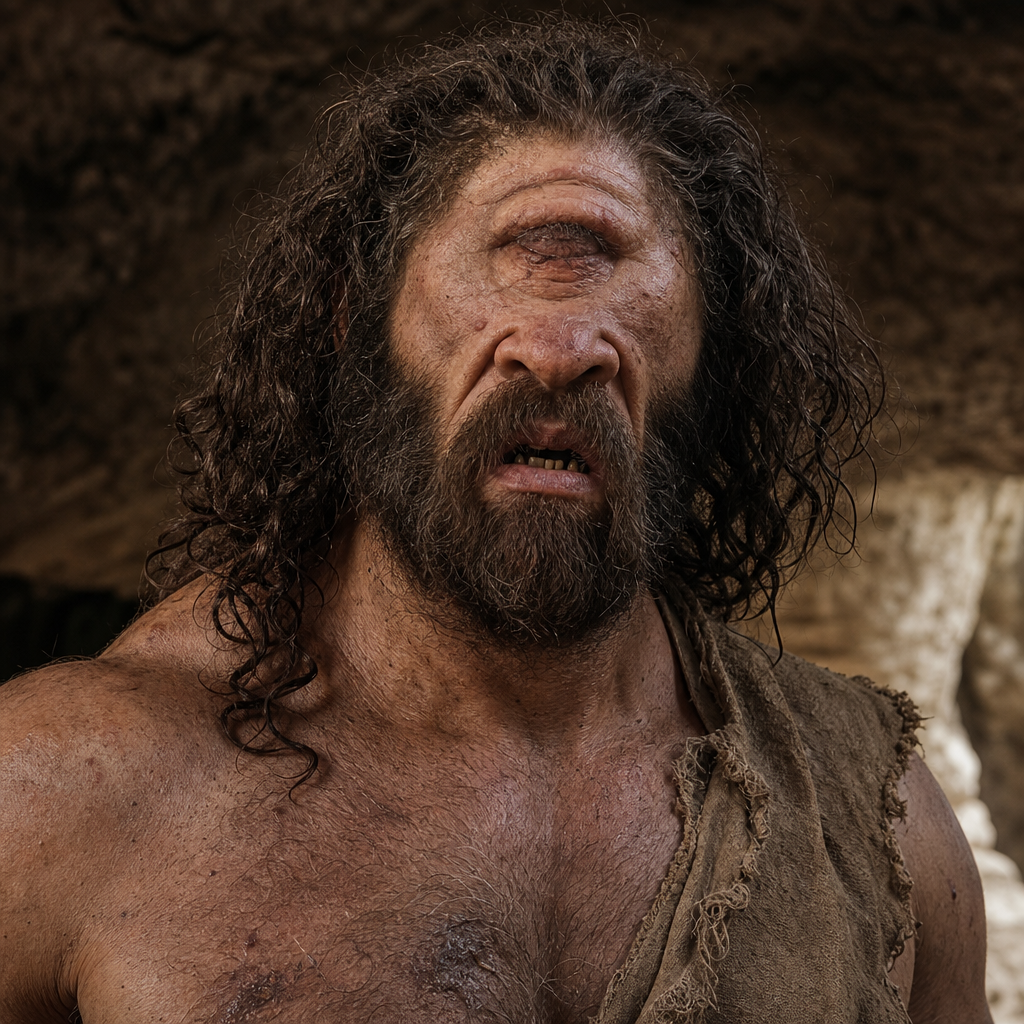
Polyphemus embodies the uncivilized brute—a creature of enormous size and strength whose lack of law, social structure, and reason makes him a natural antagonist to the cultured Ulysses. As a Cyclops dwelling in a cave apart from other civilized beings, he represents a mode of existence entirely removed from human society and its codes of hospitality and mutual respect. His relationship to the land is purely exploitative; he tends sheep but practices no agriculture, farms no crops, and maintains no government or assembly with his fellows—each Cyclops is sovereign unto himself, answering to no one. His downfall comes not through superior strength but through Ulysses' superior cunning. When Polyphemus traps Ulysses and his men in his cave, devouring several of them, Ulysses devises an ingenious escape plan involving the blinding of the Cyclops' single eye. The encounter represents both a test of Ulysses' resourcefulness and a commentary on the superiority of civilization, law, and intelligence over mere brute force. Polyphemus serves as foil to all that Ulysses represents—the cultured, law-abiding man of reason who triumphs over barbaric strength through wit and strategic thinking.
Zeus (Jove) (Jupiter)
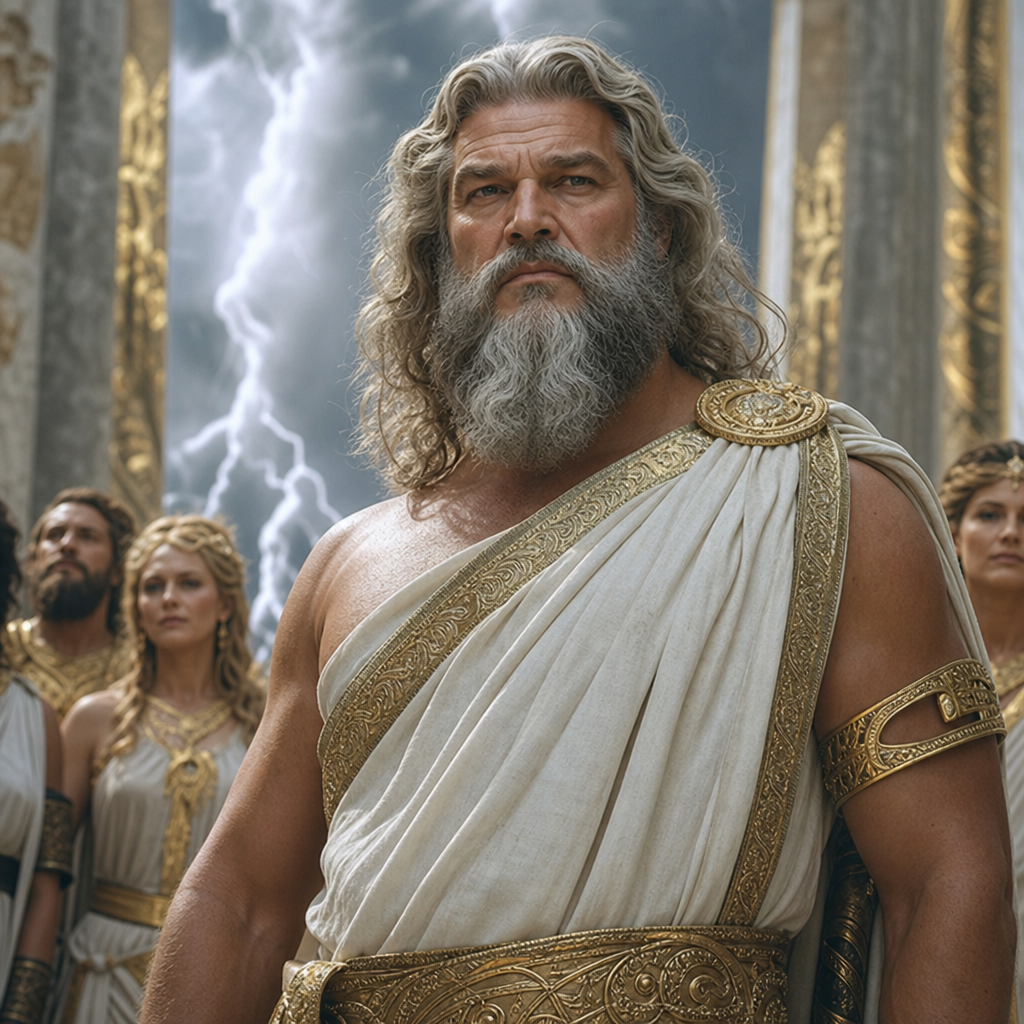
Zeus functions as the ultimate authority in the divine hierarchy, representing cosmic order and the will of fate that even gods must respect. His role in the Odyssey is primarily that of facilitator: he listens to Athene's arguments on behalf of Ulysses and, convinced of the justice of her cause, authorizes divine intervention on the mortal's behalf. Yet his authority has limits—he respects the autonomous power of other gods, particularly Poseidon, and does not simply overrule their prerogatives through raw power. This suggests a universe governed by law and mutual respect even among immortals, not mere tyranny. Zeus embodies the principle that justice will ultimately prevail, though the path to justice may be long and arduous. He allows Poseidon his revenge for the blinding of his son, yet ensures through his authority that this punishment does not become infinite or eternal. His appearance in councils of the gods establishes a framework of divine justice and obligation that shapes the entire arc of Ulysses' journey. In this sense, Zeus represents not arbitrary divine power but ordered cosmos—a universe where even suffering has meaning and purpose within a larger design.
Mentor
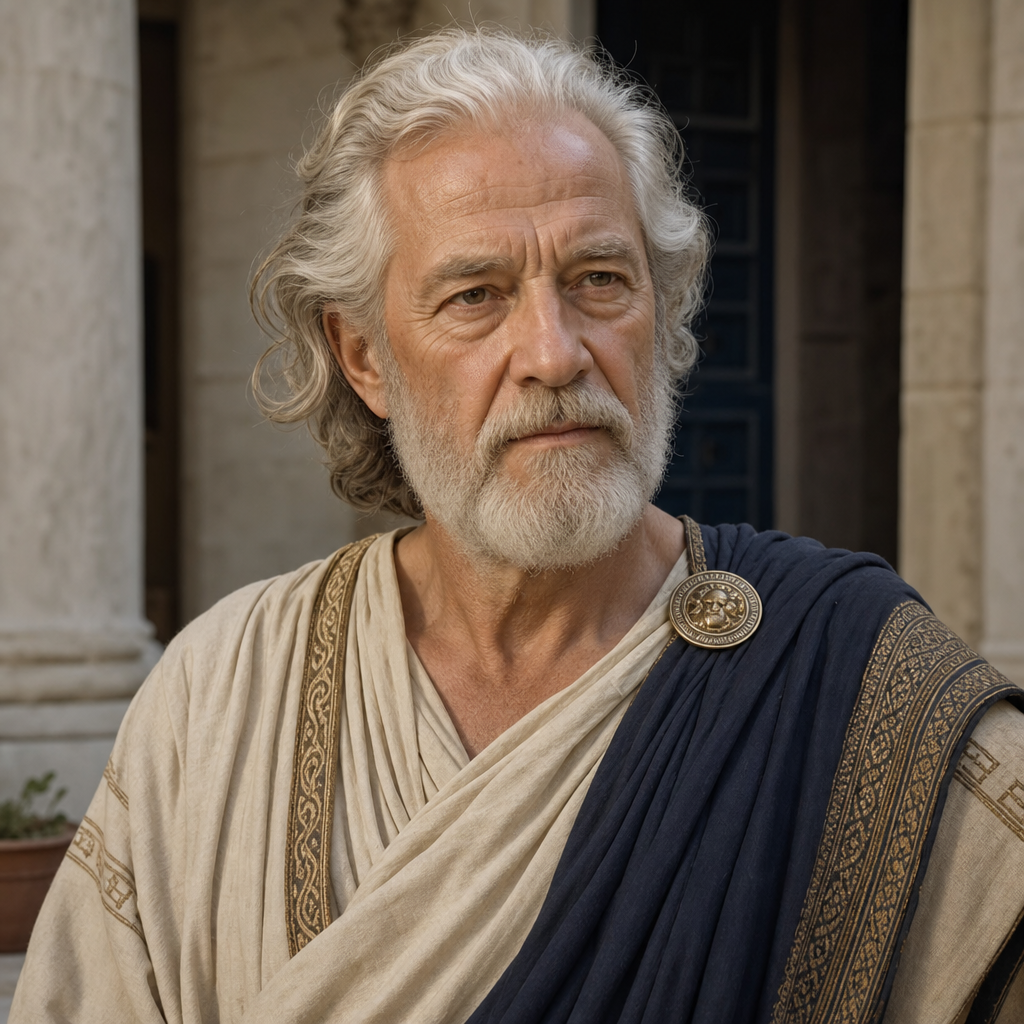
Mentor occupies a position of trust and authority within Ithaca, serving as an elder counselor to the royal household during Ulysses' prolonged absence. Though the text does not provide extensive detail of his background or role, his presence in the narrative suggests he is a man of experience, wisdom, and loyalty. He represents the continuity of social order and the transmission of values across generations—the kind of older, trusted advisor who helps the next generation navigate the complexities of leadership and duty. Significantly, Athene assumes Mentor's form when she chooses to appear among mortals, suggesting that this elder counselor represents an ideal of wisdom and trustworthiness worthy of divine emulation. This detail underscores that Mentor's value lies not in military prowess or magical power, but in the counsel and steady guidance he provides. In choosing his form, the goddess of wisdom endorses his representation of what wisdom looks like when embodied in human form—patient, experienced, and genuinely invested in the welfare of those he advises.